Best PPC Management Agencies: How to Vet One for Amazon

TL;DR: The best PPC management agencies for an Amazon brand are the ones that run your bids every week, report profit next to ACOS, leave the ad account in your name and can show results on accounts like yours. Check partner badges at the source, ask how fees scale with spend, and compare their numbers to a real benchmark such as a 15% median TACOS.
Table of Contents
- Why most rankings of PPC agencies miss the point
- Which badges actually tell you something?
- What the best PPC management agencies do every week
- How do you judge an agency’s results?
- Which type of PPC partner fits your account?
- How do PPC agency fees work, and what should you watch?
- Red flags in the first two calls
- Questions to ask before you sign
- When an agency is the wrong move
- Where to start
- Frequently Asked Questions
Most “best agency” lists rank firms by who paid to be listed. That tells you nothing about whether a given team will run your account well. What follows is the vetting process we would use ourselves if we were hiring an outside team for an Amazon ad account spending $5,000 to $50,000 a month.
Why most rankings of PPC agencies miss the point
Search the phrase and you get directories, sponsored roundups and agencies ranking themselves first. Very few of those pages separate Google Ads agencies from Amazon specialists, and that split matters more than any star rating.
A Google Ads agency optimizes for leads and website conversions. An Amazon account lives on a different scoreboard: organic rank, Buy Box share, inventory levels and TACOS (ad spend as a share of total sales). A team that is brilliant on search ads for a SaaS company can still burn money on Sponsored Products, because the levers are different.
So the first filter is simple. Ask what share of their active clients sell on Amazon, and ask for the marketplaces they manage today. If the answer is vague, the agency is a generalist that takes Amazon work on the side.
Which badges actually tell you something?
Partner badges are useful, but only if you know what they measure. Two programs come up most often.
Google Partners and Premier Partner
According to Google’s own Partner requirements page, a Google Partner needs an optimization score of at least 70%, $10,000 in ad spend across managed accounts over 90 days, and certified staff for at least half of its account strategists. Premier Partner status goes to roughly the top 3% of participating companies in a country, set once a year.
That badge proves the agency spends real money on Google Ads and keeps its certifications current. It proves nothing about Amazon.
Amazon Ads partner status
Amazon runs its own program. Its announcement of partner status describes two tiers, verified and advanced, awarded from data the agency shares through the Partner Network. Partners with status get a badge and a directory listing that shows it.
Do not take a badge on a sales deck at face value. Look the agency up in the Amazon Ads partner directory and confirm the listing, the tier and the services it covers. If the name does not appear, ask why.
What the best PPC management agencies do every week
Badges get an agency into the room. Weekly habits decide whether your margin improves. These are the habits to ask about, with examples from the agency’s own accounts.
They work the search term report
Bid automation is table stakes. The real work is reading the search term report, moving converting queries into exact match, and adding negatives for traffic that will never buy. An account where nobody has added a negative keyword in a month is leaking budget. We wrote up where that money goes in our piece on where Amazon ad budget quietly leaks.
They plan around inventory
Ads that keep spending on a SKU with nine days of stock left are a common and expensive mistake. Good managers check stock cover before they push a campaign, and they slow spend before a stockout instead of after it. Ask how the agency gets inventory data and who watches it.
They report profit next to ACOS
ACOS on its own hides whether a campaign makes money. A useful weekly report shows ad spend, ad sales, TACOS, and contribution margin per SKU or product family, with what changed and why. If the report is a dashboard export with no written notes, nobody is thinking about your account.
How do you judge an agency’s results?
Ask for numbers on accounts similar to yours, then put them next to a benchmark. Without a benchmark, every agency’s case study looks impressive.
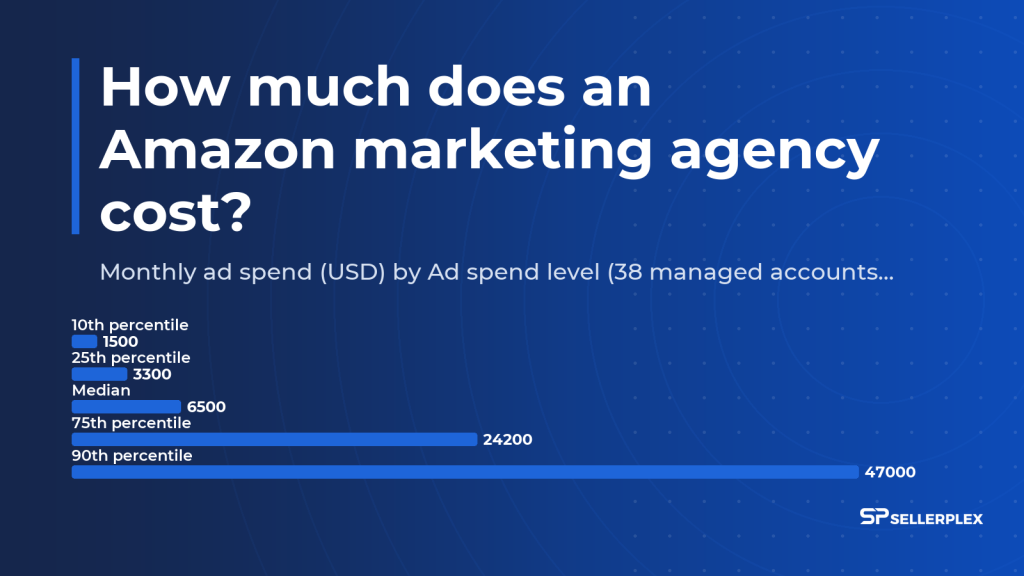
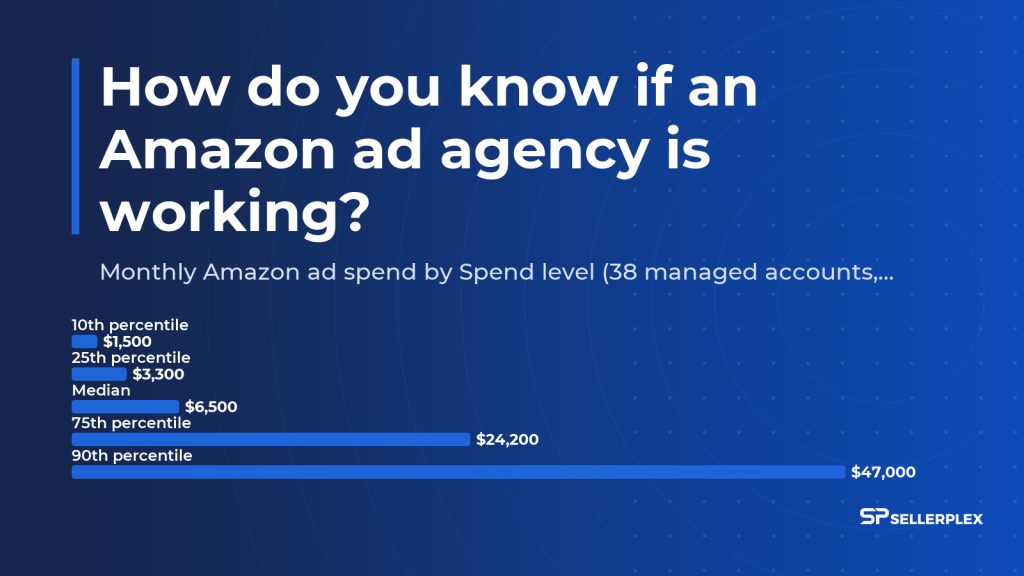
SellerPlex publishes one. Our Amazon PPC benchmarks from managed accounts cover 38 US Amazon.com accounts we manage, January to June 2026. The median account ran a 38% ACOS and a 15% TACOS. The median account spent about $6,500 a month on ads, and the median blended cost per click rose from $0.99 in January to $1.36 in June.
Treat those figures as a sanity check. An agency promising to cut your ACOS to 15% in a month, on a crowded category, is selling hope. One that shows TACOS falling over two or three quarters while total sales grow is showing you the right thing.
Three questions sort real results from cherry-picked ones:
- What was the account’s TACOS before you started, and what is it now, over at least six months?
- How many accounts in this category have you run, and how did the weakest one do?
- Can I speak to a current client with a similar monthly ad spend?
See How Your Ad Account Compares
Get a free review of your Amazon ads against benchmarks from 38 managed accounts, with the three fixes worth making first.
Which type of PPC partner fits your account?
Not every brand needs a full agency. The right choice depends on how much you spend and what else needs managing. Here is how the usual options differ on the points sellers decide on.
Generalist PPC agency
One account manager usually covers several channels, so Amazon gets a slice of their week. Fees tend to be a retainer or a share of spend. The badge to check is Google Partners, and any listing fix that hurts conversion lands back on your desk.
Amazon PPC specialist
An Amazon ads team runs your campaigns and sends listing advice for you to act on. Billing is a share of spend, a flat fee or a mix. Check Amazon Ads partner status and ask how many accounts each manager carries.
Full-service Amazon agency
Ads, listing and inventory staff sit in one team, so a weak main image or a looming stockout gets fixed by the same people who run the bids. Ads are folded into a wider retainer. This is the model SellerPlex works in.
Freelancer
One person does everything, billed hourly or as a flat monthly sum, usually month to month. Quality varies a lot, so ask for their personal Amazon Ads certifications and two references.
Fee shapes and contract lengths vary by firm, so use these as questions to ask.
How do PPC agency fees work, and what should you watch?
Most agencies charge in one of three ways: a percentage of ad spend, a flat monthly fee, or a base fee plus a smaller percentage. Each one changes the agency’s incentives.
A pure percentage of spend rewards the agency when your budget grows, whether or not the extra spend is profitable. A flat fee keeps incentives neutral, but it can leave a growing account under-served if the fee never moves. Hybrids sit in between and try to balance both pressures.
Run the math at your current spend and at double it. If the fee at double spend looks hard to justify, negotiate a cap now. Also ask what the fee covers: DSP, Sponsored Brands video and new-marketplace launches are sometimes billed extra.
For a deeper look at how management costs compare across options, see four ways to run Amazon ads, compared.
Red flags in the first two calls
Some warning signs show up before you sign anything. Treat any of these as a reason to slow down.
The agency wants to run ads from its own advertiser account instead of being added to yours. You should always own the account, the campaign history and the data, and the agency should work through user access you can revoke.
Nobody asks about your margins. An agency that sets targets without knowing landed cost, fees and contribution margin is guessing at what a good ACOS is for you.
The proposal promises a specific ACOS before anyone has opened the account. Honest teams quote a range after an audit.
The person on the sales call will never touch your account. Ask to meet the manager who will, and ask how many accounts that person runs. Divide a 40-hour week by that number and you know roughly how much attention your account will get.
Questions to ask before you sign
Bring this list to the final call. A strong agency answers each one without hesitation.
- Who will manage the account day to day, and how many other accounts do they handle?
- How often do you review search terms and add negatives?
- What does a weekly report contain, and can I see a redacted example?
- How do you account for inventory levels before raising bids?
- Which marketplaces and ad types are included in the fee?
- What notice period applies, and what do I keep if we part ways?
- Can you show TACOS over six months for two accounts like mine?
If you are still deciding between a consultant and a full team, our guide to hiring an Amazon PPC agency or consultant covers that choice in more depth.
When an agency is the wrong move
An agency is not always the answer. In our benchmark set, the lowest-spending tenth of accounts spent under $1,500 a month on ads. At that size, a monthly fee can eat most of the gain an expert could find. At that level, learning the console yourself or using rules-based software is usually the better use of money.
An agency also struggles when the real problem sits elsewhere. Weak main images, a price that is out of line with the category, or regular stockouts will sink any campaign. Fix those first, or choose a partner that handles them too, such as a team offering Amazon PPC management alongside listings and inventory.
Where to start
Pull the last six months of your own data first: ad spend, ad sales, total sales and TACOS by month. That gives you a baseline to hold any agency to, and it shows within minutes whether a pitch is realistic.
Then shortlist three agencies that manage Amazon accounts in your spend range, verify their badges in the official directories, and run each through the questions above. Choose the team that asks about your margins before it talks about its own results.
Frequently Asked Questions
How much does a PPC management agency cost for Amazon?
Fees usually follow three models: a percentage of ad spend, a flat monthly retainer, or a base fee plus a smaller percentage. The right comparison is the total fee at your current spend and at double that spend. Ask what is included, because DSP campaigns, video ads and extra marketplaces are sometimes billed separately.
Is a Google Partner badge useful when hiring an Amazon agency?
It shows the agency spends at least $10,000 over 90 days on Google Ads and keeps staff certified, which says something about its search skills. It says nothing about Amazon. For Amazon work, look for Amazon Ads partner status in the official partner directory and ask about current Amazon clients.
What results should I expect in the first 90 days?
Expect an audit, a cleaner campaign structure and a steady drop in wasted spend on search terms that never convert. Large ACOS swings are possible early, either way, while campaigns restructure. Judge the agency on TACOS and contribution margin over two quarters, since short windows mostly reflect seasonality and restructuring.
Should I keep ownership of my Amazon ad account?
Yes, always. The agency should work inside your advertiser account through user access you control and can remove. That way the campaign history, data and audiences stay with your brand if you change agencies. Any agency that insists on running ads from its own account is a reason to walk away.
Next step: Talk to a Strategist. Book a free strategy session with our Amazon and e-commerce specialists. No obligations, just actionable insights.