Amazon Ad Agency: What It Actually Runs for Your Brand
TL;DR: An Amazon ad agency runs your Sponsored Products, Sponsored Brands and Sponsored Display campaigns inside your own Amazon Ads account, and adds display and video only once search ads make money. Expect weekly search term work, bid changes tied to margin and a written report. Judge results on TACOS over two quarters. Across 38 accounts we manage, the median TACOS was 15%.
Table of Contents
- What does an Amazon ad agency actually do?
- Which ad types should an agency run first?
- What changed with Amazon DSP?
- What the first 30 days with an ad agency look like
- How do you know if an Amazon ad agency is working?
- Where an ad agency stops, and why that hurts
- When you do not need an agency yet
- Where to start
- Frequently Asked Questions
Most sellers who search for an ad agency have already tried running the console themselves. The campaigns work, sort of, but nobody has time to read search terms every week, and the cost per click keeps creeping up. This page explains what the work looks like from the inside, so you can tell a real ad team from a reseller of bid software.
What does an Amazon ad agency actually do?
An Amazon ad agency plans, builds and manages paid campaigns on Amazon for your brand, and reports what that spend returned. The core is sponsored ads, which Amazon prices per click.
Amazon describes Sponsored Products as cost-per-click ads that promote individual product listings, with no monthly or upfront fees. You set a bid and a daily budget. Products must be eligible for the Featured Offer, which is why an agency that ignores your offers and stock is working half blind.
Around that core sit three more layers. Sponsored Brands put your logo and several products at the top of search. Sponsored Display retargets shoppers on and off Amazon. Programmatic display, video and audio reach people who are not searching yet.
The daily work is less glamorous than the pitch decks suggest. On the accounts we run, it looks like this:
- Reading the search term report weekly, moving converting queries into exact match and adding negatives for traffic that never buys.
- Adjusting bids and placements daily, against a target that comes from the product’s margin.
- Splitting campaigns by product economics so a hero SKU and a slow mover never share one budget.
If an agency cannot show you a recent negative keyword list from a live account, the account is probably on autopilot.
Which ad types should an agency run first?
Search ads come first, and display waits until search is profitable. Shoppers who type a query on Amazon are close to buying, so Sponsored Products is where most budgets earn their keep.
Display and video sit higher in the funnel. They build reach and bring back past visitors, but they rarely pay off on an account whose search campaigns still leak money. In our own Amazon PPC management work, we add display only once search campaigns are profitable and the account is ready to scale.
A sensible order for a brand starting with an agency looks like this:
- Rebuild Sponsored Products by product economics, with exact match for proven winners.
- Add Sponsored Brands for the hero line once you have a Store and enough reviews to convert.
- Use Sponsored Display to retarget product page visitors.
- Test display, video or streaming TV only with a clear question you want answered.
Video is worth a look early. Amazon’s own figures show Sponsored Products campaigns with video saw a 67% higher click-through rate and a 9% higher conversion rate than campaigns without video (Amazon internal data, US, June 2026).
For a fuller breakdown of when each layer makes sense, see our comparison of Amazon DSP and Sponsored Ads.
What changed with Amazon DSP?
Amazon DSP is now part of a single platform Amazon calls Amazon Ads Agent. According to Amazon’s DSP product page, it is “one ad platform for all of your advertising with Amazon,” buying sponsored ads and display, video and audio campaigns in one place.
For brands this matters in two ways. Campaign settings, audiences and performance history carried over automatically, so nothing needs rebuilding. The old DSP controls now sit under advanced settings in Display, Video and Audio campaigns, while a simpler, outcome-based setup is open to all advertisers.
That lowers the barrier to programmatic ads. It does not lower the skill needed to run them well. A simplified campaign builder will happily spend a budget on reach that never turns into orders. Ask any agency how it measures display: new-to-brand orders, branded search lift and the effect on organic rank are all fair answers. Clicks alone are not.
What the first 30 days with an ad agency look like
A good first month is mostly cleanup, and the results arrive after it. Here is how SellerPlex runs it, and what you should expect from any team worth hiring.
Week 1: audit and restructure plan
The agency opens your historical campaigns, keyword performance and bid settings. It flags ads that spend without converting. You should get a written restructure plan before anything changes.
Week 2: rebuild and negatives
Campaigns are rebuilt around product economics. Wasted search terms are negated, and proven ones move into their own exact match campaigns. Expect ACOS to swing in both directions while this settles.
Weeks 3 and 4: daily optimization and first report
Bids and placements move daily. The first weekly report lands with spend, sales, ACOS and the changes made, written so you can follow the reasoning. Most of the accounts we take on are restructured and on that daily rhythm within the first month.
You keep ownership the whole time. The agency works inside your advertiser account through user access you control and can remove. Your campaign history and data stay with your brand if you ever part ways.
How do you know if an Amazon ad agency is working?
Look at TACOS over two quarters, set against a benchmark. TACOS is ad spend divided by total sales, ads plus organic. A falling TACOS while total sales grow means ads are lifting the whole account.
We publish our own yardstick. Our Amazon PPC benchmarks from managed accounts cover 38 US Amazon.com accounts from January to June 2026. The median account ran a 38% ACOS and a 15% TACOS, and converted 8.3% of ad clicks into orders. Median cost per click rose from $0.99 in January to $1.36 in June, a 37% increase in six months.
That last number explains a lot of frustration. If your ACOS rose this year while you changed nothing, rising click prices may be the reason, and an agency should say so plainly. It should also show which part of the increase it can recover through better targeting.
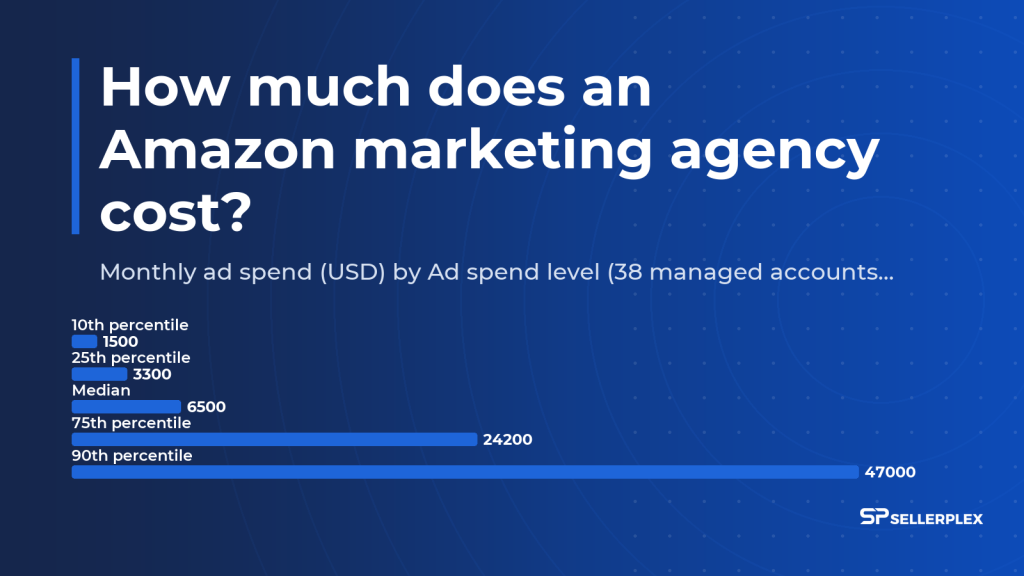
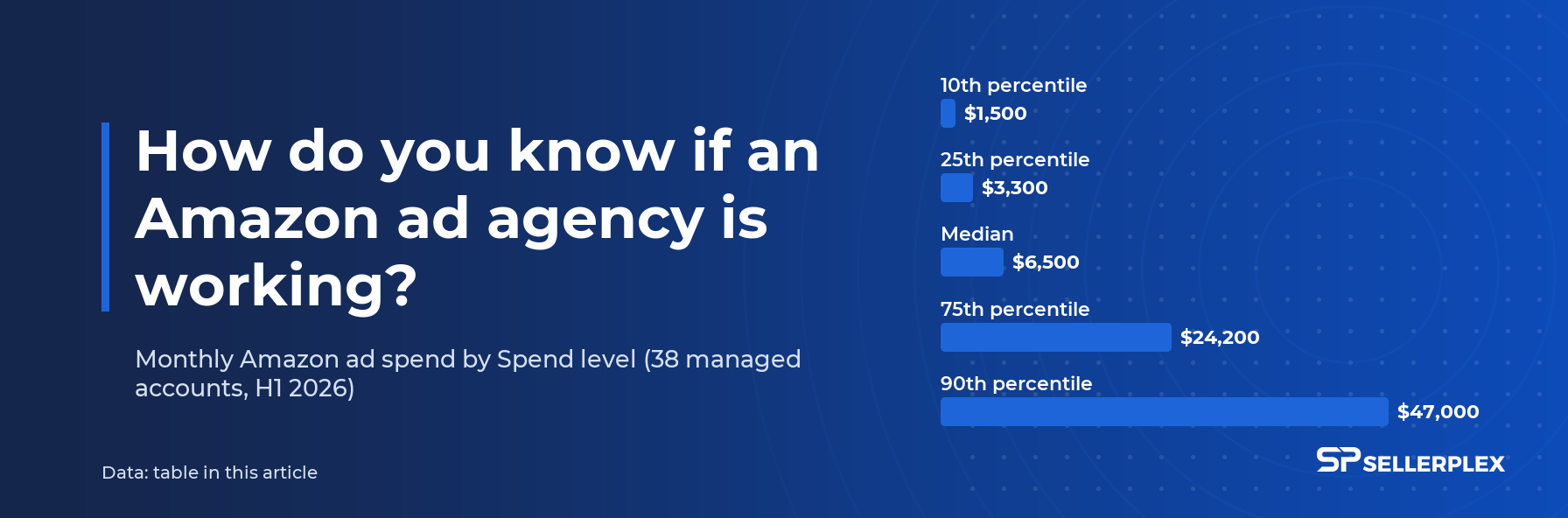
Spend level also shapes what an agency can do for you. Here is how monthly ad spend was spread across the same 38 accounts:
| Spend level (38 managed accounts, H1 2026) | Monthly Amazon ad spend | What an agency can realistically add |
|---|---|---|
| 10th percentile | $1,500 | Limited room; a fee can absorb most of the gain |
| 25th percentile | $3,300 | Search term cleanup and structure pay off quickly |
| Median | $6,500 | Full sponsored ads management, video tests |
| 75th percentile | $24,200 | Sponsored Brands, retargeting, display tests |
| 90th percentile | $47,000 | Display and video programmes with proper measurement |
See How Your Amazon Ads Compare
Get a free review of your ad account against our 38-account benchmark, with the first fixes worth making.
Where an ad agency stops, and why that hurts
Most ad agencies stop at the edge of the ad console. That is a problem, because the biggest ad losses we see start outside it.
A main image that loses the click, a price above the category, or nine days of stock left on the hero SKU will all sink a well-built campaign. An ads-only agency sends you a note about it. Then the note waits in your inbox while the budget keeps spending.
This is where budget quietly disappears, and we wrote up the most common cases in our piece on Amazon PPC inefficiencies. If your listings and inventory need as much attention as your ads, a that runs all three in one team will usually get further than a specialist in only one.
SellerPlex works that way. We have run Amazon accounts for 100+ brands since 2018, with ads, listings and supply chain handled by people who talk to each other daily.
When you do not need an agency yet
Some accounts are too small for an agency to pay back its fee. In our benchmark set, the lowest-spending tenth of accounts spent about $1,500 a month on ads. At that level, learning the console yourself is often the better use of money.
An agency also struggles when the product is the problem. If reviews sit under four stars or the offer is uncompetitive, more ad spend only buys more evidence of that.
If you have decided you do want help, our guide on how to vet a PPC management agency covers fees, partner badges and the red flags to watch in the first two calls. Amazon also lets agencies earn partner status in two tiers, verified and advanced, which you can check in its partner directory.
Where to start
Pull six months of your own numbers before you speak to anyone: ad spend, ad sales, total sales and TACOS by month. Put them next to the 15% median TACOS above. That one comparison tells you whether you need a rescue, a tune-up or nothing at all.
Then ask each agency you speak to for the first-month plan in writing, and for TACOS history on two accounts at your spend level. If you want us to do that comparison with you, book a strategy call with SellerPlex.
Frequently Asked Questions
How much does an Amazon ad agency cost?
Agencies usually charge a percentage of ad spend, a flat monthly fee, or a base fee plus a smaller percentage. SellerPlex does not publish one price, because the fee depends on account size and scope. Compare quotes at your current spend and at double it, and ask whether display, video and extra marketplaces cost extra.
Do I need Amazon DSP to grow?
Most brands do not need display or video until their search campaigns are profitable. Amazon now runs DSP inside Amazon Ads Agent, with a simpler setup open to all advertisers. That makes it easier to start, but measurement still decides whether the spend pays back, so add it only with a clear goal.
Will I keep control of my Amazon Ads account?
You should. A trustworthy agency works inside your own advertiser account through user access you grant and can remove at any time. Your campaigns, history and audiences stay with your brand if you change partners. An agency that wants to run your ads from its own account is a reason to walk away.
How fast should an Amazon ad agency show results?
The first month is mostly audit, restructure and cleanup, so early ACOS can move in both directions. Judge the agency on TACOS and total sales over two quarters. A single month mostly reflects seasonality and restructuring work, and click prices alone rose 37% across our accounts in the first half of 2026.
Next step: Talk to a Strategist. Book a free strategy session with our Amazon and e-commerce specialists. No obligations, just actionable insights.