5 Effective Strategies for Successful Amazon Product Resea

TL;DR: The Amazon market research methods that hold up are rank tracking over weeks, keyword demand checks, review mining, a per-unit profit model and category trend reading. Use them in that order. Track Best Sellers Rank for two to four weeks, confirm search demand in two sources, turn recurring complaints into a product spec, and price in the referral fee (15% in most categories) before you order inventory.
Table of Contents
- 1. Analyze Bestseller Categories and Rankings
- 2. Use Amazon Product Research Tools
- 3. Conduct Keyword Research
- 4. Study Customer Reviews and Feedback
- 5. Evaluate Profitability and Competition
- A Step-by-Step Amazon Product Research Process
- How do you validate Amazon product ideas for FBA before ordering?
- Which Amazon market research methods go beyond the product pick?
- A Product Research Checklist Before You Commit
- Which Amazon fees should you include before choosing a product?
- How do you turn customer complaints into a supplier requirement?
- Frequently Asked Questions
- Final Thoughts
Amazon is where many product searches start, and that scale cuts both ways. A well-chosen product can build a durable business. A poorly researched one ties up cash in inventory nobody wants. The difference usually comes down to the research you do before you place a purchase order.
Good research tells you where demand already exists, how crowded the field is and whether the margins survive Amazon's fees. This guide covers five strategies FBA sellers rely on, a step-by-step process for beginners, a way to validate ideas, broader market research methods and a checklist you can run any product through.
1. Analyze Bestseller Categories and Rankings
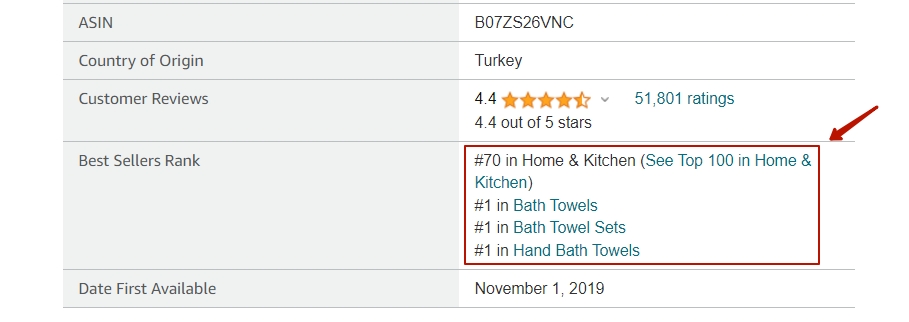
Start where the demand signal is strongest. Amazon publishes Best Sellers lists for every category and subcategory, and those rankings show what shoppers are buying right now. Reviewing the top-selling categories helps you shortlist niches worth a closer look.
Rankings also tell you something about competition. A product that holds a strong Best Sellers Rank month after month signals steady demand. A product that spikes and disappears is probably riding a fad. Track BSR over weeks, because one snapshot can catch a lightning deal or a seasonal bump.
Pay attention to the depth of demand too. If only the top two or three listings in a subcategory sell meaningfully, the niche is winner-take-all and hard to enter. When sales spread across the top twenty listings, a new seller can usually win some share. Our guide on how to read the Amazon best seller list explains what the rank does and does not measure.
Amazon's Movers and Shakers page adds a second view. It shows the biggest rank gainers over the last day, which is useful for spotting early momentum and useless for judging lasting demand on its own.
2. Use Amazon Product Research Tools
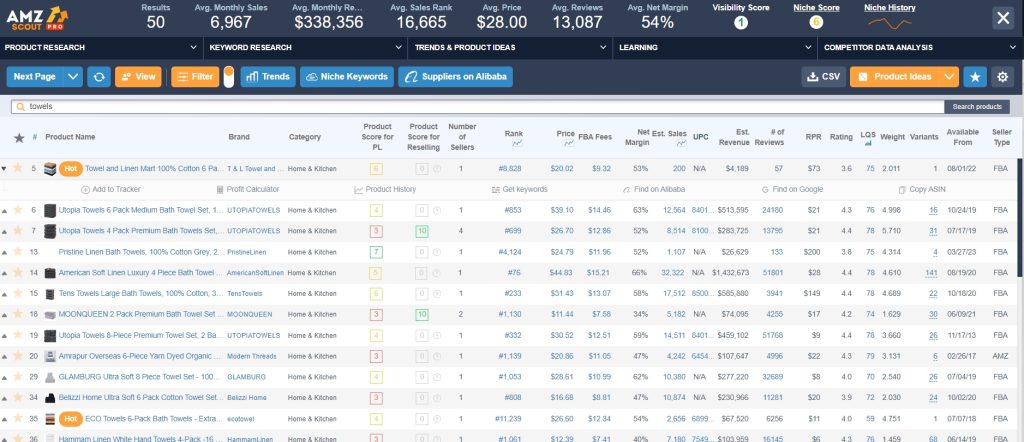
Manual browsing only gets you so far. Research tools estimate monthly sales, track price history, score competition and surface niches you would never find by scrolling. One popular option is AMZScout, which covers sales estimates, keyword analysis and product tracking in one place.
Whichever tool you pick, treat its numbers as estimates. Sales figures are modeled from rank movements, so cross-check a promising product against at least two sources before you commit money. We compare the main options in our guide to the best product research tools.
Tools also help with ongoing monitoring. Set alerts on the niches you care about and you will see new entrants, price wars and demand shifts before they hit your own sales reports.
3. Conduct Keyword Research
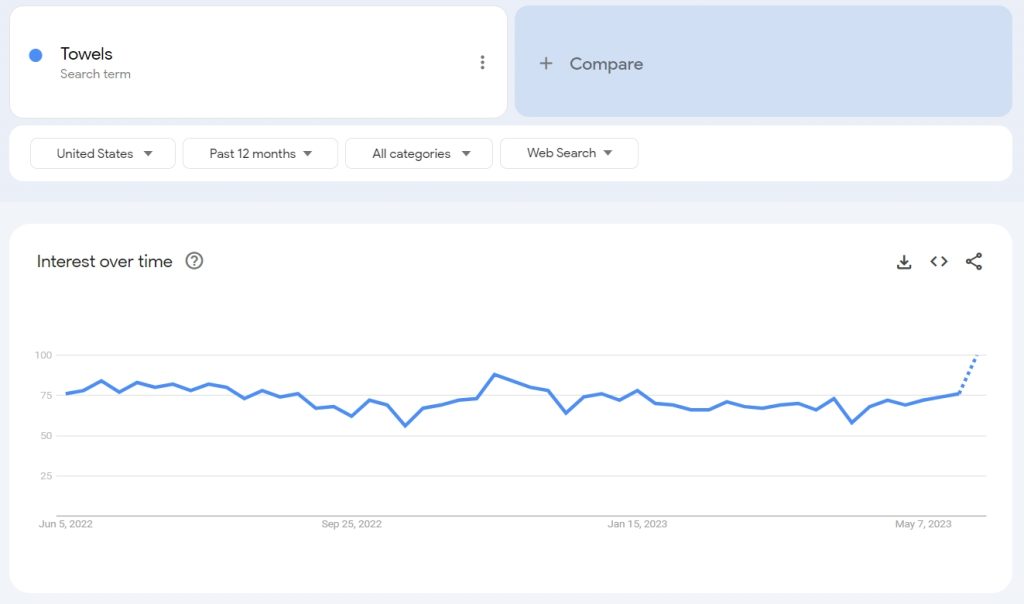
Keyword research does two jobs in Amazon product research. It confirms demand before you launch, and it shapes the listing you eventually write. The terms shoppers type tell you how big the opportunity is and which words convert.
Free sources cover a lot of ground. Google Keyword Planner shows broad search volume, and Google Trends reveals whether interest is growing or fading. Amazon's own autocomplete exposes the long-tail phrases real buyers use. Amazon-specific keyword tools then add marketplace search volume on top.
Once you commit to a product, work the winning terms into your title, bullet points and description. Strong keyword coverage lifts visibility in Amazon search, and it feeds directly into listing best practices when you build the detail page.
4. Study Customer Reviews and Feedback
Reviews are the cheapest market research you will ever get. Competitor reviews show what buyers love, what disappoints them and what they wish existed. Read the one-star and three-star reviews of the top ten listings, and recurring complaints will stand out within an hour.
Every recurring complaint is an improvement you can build in from day one. If buyers keep saying the zipper breaks, source a better zipper. When reviewers ask for a size nobody offers, that gap is your differentiation. Positive reviews matter as well, since they show which features you cannot leave out.
The Q&A section deserves the same attention. Questions shoppers ask before buying reveal objections your listing copy and images will need to answer.
5. Evaluate Profitability and Competition
Demand means nothing if the unit economics fail. Before committing to any product, build a per-unit profit model: landed cost, inbound shipping, Amazon referral and FBA fees, storage, returns and advertising. What is left is your real margin. Plenty of products that look attractive at retail price turn out to be break-even after fees.
Advertising cost is the line that surprises most new sellers. Competitive niches often need heavy PPC spend just to be seen, so estimate a realistic cost per sale and put it in the model from the start.
Then weigh the competition itself. A niche with entrenched brands and thousands of reviews per listing is expensive to crack. Look for proven demand where the incumbents have weak listings, thin review counts or obvious product flaws you can fix. Low-competition research is slower, and it usually produces launches that need far less ad spend to gain traction.
A Step-by-Step Amazon Product Research Process
If you are starting from zero, the five strategies above fold into a repeatable weekly routine. This is the process we recommend to beginners doing Amazon product research for the first time:
- Generate ideas. Browse Best Sellers, Movers and Shakers and New Releases in categories you understand. Add anything interesting to a spreadsheet.
- Screen for demand. Pull estimated monthly sales and keyword search volume for each idea. Cut anything below your revenue threshold.
- Screen for competition. Check review counts, listing quality and how many sellers split the demand. Cut winner-take-all niches.
- Model the margin. Get supplier quotes, estimate fees and shipping, and calculate net profit per unit at a realistic selling price.
- Validate the survivors. Track the finalists for two to four weeks, watching BSR stability, price movements and seasonality before ordering samples.
Sellers running a wholesale model can use the same funnel with one change. Instead of validating a product to manufacture, you validate brands whose products already sell, then check whether the Buy Box economics leave room for another authorized reseller.
For what happens after the pick, our guide to Amazon FBA optimization covers turning a validated product into a scalable operation.
How do you validate Amazon product ideas for FBA before ordering?
You validate an Amazon product idea for FBA by proving three things with data: steady demand, a gap you can fill and a margin that survives fees and ads. If any one of the three fails, drop the idea or change it.
Steady demand means the top listings hold their rank for at least two to four weeks and the main keyword shows stable or rising interest in Google Trends. A gap means a recurring complaint or a missing variant you can actually source. A margin means the profit model still works at a price 10% below today's average, because a new listing rarely sells at full price in its first months.
The last step is physical. Order samples from two or three suppliers and test them against the complaints you found. Our checklist of checks to run before you order FBA inventory goes deeper on supplier, compliance and inbound questions.
Which Amazon market research methods go beyond the product pick?
The Amazon market research methods that go beyond a single product look at where a whole category is heading. Product research answers "what should I sell?" Market research answers whether the category will still reward you in a year. Sellers who do both make fewer expensive mistakes.
Track category trajectories. Google Trends and category-level Best Sellers movements show whether a market is growing or shrinking. Entering a shrinking category with a great product is still a losing trade.
Use Amazon's own search data. Brand owners enrolled in Brand Registry get Brand Analytics, which Amazon's Brand Registry page describes as a way to analyze trends in customers' searches and purchases. It shows which search terms lead to clicks and purchases in your category, straight from Amazon.
Study the top brands, in your niche and next to it. How do they price? Where do they launch first? Their behavior shows where margin pressure will appear next.
Listen outside Amazon. Reddit threads, TikTok comments and niche forums surface unmet needs months before they show up in marketplace data. Some of the best opportunities start as complaints on social media.
Re-run the research on your own catalog. A product that cleared every bar two years ago may now sit in a niche full of new competitors. It is better to see that in the data than in your quarterly numbers.
A Product Research Checklist Before You Commit
Run every serious candidate through a fixed set of criteria. Written criteria keep emotion out of the decision and let you compare ideas on equal footing:
Size and weight. Light, compact products cost less to ship and store, and they fall into lower FBA fee tiers. Oversized items eat margin fast.
Price range. Mid-range prices tend to balance demand and margin. Very cheap products leave no room for ad spend. Very expensive ones shrink your buyer pool and raise inventory risk.
Seasonality. Year-round demand keeps cash flow steady. Seasonal products can work, but only if you plan inventory and cash around the peaks.
Fragility and durability. Fragile items generate damage returns and bad reviews. Favor products that survive rough handling.
Branding and differentiation. Generic commodities compete on price alone. Products you can improve, bundle or brand give you something to defend.
Upsell potential. A product that leads to accessories or refills raises lifetime value and makes the advertising math easier.
A candidate does not need a perfect score on all six. It does need a clear answer on margin and differentiation, because those two decide whether it survives competition. Our list of beginner FBA products with real margin shows these criteria applied to real categories.
Which Amazon fees should you include before choosing a product?
Include the selling plan fee and the referral fee for the product's category before you estimate margin. Then add fulfillment costs based on the packed size and weight you expect to ship.
According to Amazon's pricing page, the US Individual plan costs $0.99 per item sold and the Professional plan costs $39.99 per month. The same page lists referral fees by category, most with a $0.30 minimum per item:
| Category | Referral fee | Minimum per item |
|---|---|---|
| Home and Kitchen | 15% | $0.30 |
| Sports and Outdoors | 15% | $0.30 |
| Toys and Games | 15% | $0.30 |
| Tools and Home Improvement | 15% | $0.30 |
| Tires | 10% | $0.30 |
| Video Game Consoles | 8% | none |
On a $25 Home and Kitchen item, the referral fee alone is $3.75 before fulfillment, storage and ads. Our free FBA fee calculator adds the fulfillment side. Recalculate profit at a lower selling price to see how much room remains for advertising. SellerPlex's Amazon PPC services can take on the advertising side of your launch plan.
How do you turn customer complaints into a supplier requirement?
Turn a recurring complaint into a feature you can inspect before buying inventory. If buyers report leaking lids, ask the supplier to describe its seal and show how it tests the finished product.
Write the acceptance criteria into your purchase specification. Inspect a preproduction unit against those criteria and confirm the supplier will use the same materials in the production batch. Include any extra inspection cost in your margin calculation. When sourcing gets this detailed, our supply chain management team handles supplier specs and inspections for sellers who would rather not run them in-house.
Frequently Asked Questions
How long should Amazon product research take?
Expect two to six weeks for a thorough pass on a new niche. The screening steps go quickly with tools. Watching demand stay stable over several weeks is what separates real research from a hopeful guess, so do not compress the validation stage even when an idea looks obvious and the supplier quote is already in hand.
Do free tools work for Amazon product research?
You can get far with Amazon's Best Sellers lists, autocomplete, Google Trends and Keyword Planner. Paid tools earn their fee once you need sales estimates and historical data for many candidates at once. Start free, keep notes in a spreadsheet, and buy a tool only when manual checks start slowing your weekly shortlist.
How is wholesale product research different from private label?
Private label research validates a product you will manufacture and brand. Wholesale research validates existing branded products, so the focus shifts to Buy Box competition, supplier authorization and whether the margin survives with several sellers on one listing. Both still need the same fee math and the same few weeks of rank tracking.
How do I find low-competition products on Amazon?
Look for niches where demand spreads across many listings, review counts among the top sellers stay low and listing quality is visibly weak. Long-tail keywords with steady search volume and few dedicated products are the classic signal. Check that the low competition is not simply low demand by confirming rank stability first.
Can I outsource Amazon product research?
Yes. Established sellers often hand research and validation to an agency or a trained assistant once their criteria are written down. A partner can run the screening funnel and bring you validated candidates, while you keep the final call on brand fit, supplier choice and how much cash to commit to the first order.
Final Thoughts
Effective Amazon product research works best as a system you repeat. Rank tracking, research tools, keyword checks, review mining and profit modeling each remove a layer of risk before your money is on the line. Run the process on a schedule, keep your criteria written down, and let the data overrule your enthusiasm when the two disagree.
This article began as a guest post by John Hardy, an e-commerce entrepreneur who sold on Amazon for over five years, and is kept up to date by the SellerPlex team.
Ready to Grow Your Amazon Business?
Book a free strategy session with our Amazon and e-commerce specialists. No obligations, just actionable insights.
Talk to a Strategist