


Amazon ad costs are still rising, while margin pressure is getting tighter across most categories. In 2026, you cannot afford a “set and forget” ad account. You need tighter structure, faster optimization loops, and clear profitability targets by SKU. That is exactly where amazon ppc 2026 strategy differs from older playbooks.
Table of Contents
In this guide, you will learn how amazon ppc 2026 works, what changed, which levers drive profitable growth, and how to build a practical system your team can run weekly. You will also get common mistakes to avoid, advanced tactics, and a direct path to stronger TACoS and better contribution margin.
What Is amazon ppc 2026?
At its core, amazon ppc 2026 is your paid visibility system across Sponsored Products, Sponsored Brands, Sponsored Display, and Amazon DSP-aligned retargeting paths. However, in 2026, it is no longer only about clicks and CPC. Instead, it is about controlling ad spend at the SKU level, protecting margin, and feeding conversion signals back into your broader ranking strategy.
In practical terms, amazon ppc 2026 means you run campaigns as a profit engine, not just a traffic engine. You segment intent better, bid by placement and query class, and separate exploration from scaling. As a result, you make faster budget decisions and stop funding low-quality traffic.
Additionally, this matters because competition is denser in nearly every established category. According to Amazon Ads benchmarking resources, advertisers that continually optimize creatives, targeting, and bids outperform static accounts over time. Amazon PPC management services
How It Works
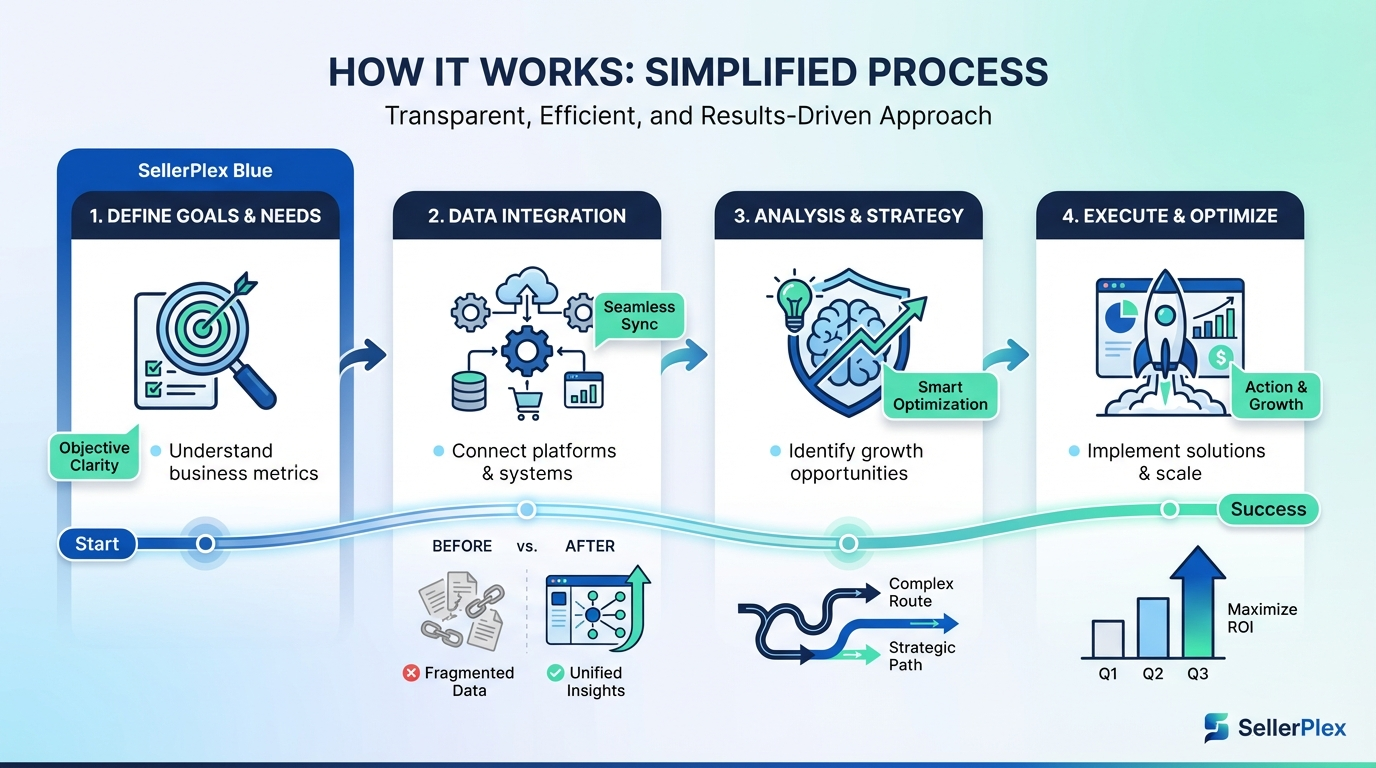
1) Match campaign type to funnel intent
First, amazon ppc 2026 starts with intent mapping. Sponsored Products captures bottom-funnel search demand. Sponsored Brands supports brand discovery and category terms. Sponsored Display and DSP support retargeting and audience expansion. Therefore, each campaign type should have a specific role.
2) Build query pathways
Next, you separate exact, phrase, and broad campaigns by objective. Exact campaigns protect profitable search terms. Phrase and broad campaigns discover new terms. Product targeting campaigns intercept competitor ASIN traffic. Consequently, query data flows from discovery to scale.
3) Apply placement and bid controls
Additionally, amazon ppc 2026 requires active use of top-of-search multipliers and dynamic bidding modes. You do not bid the same on every query. You bid by expected conversion value. For example, top-of-search may justify higher bids for proven branded and high-intent generic terms.
4) Use negatives and harvesting loops
Furthermore, you add negative keywords aggressively to prevent waste. Then, you harvest converting search terms into dedicated exact campaigns. As a result, you increase relevancy and reduce blended ACoS volatility.
5) Optimize to contribution margin, not vanity ROAS
Finally, you connect ad decisions to real unit economics. ROAS can look good while margin is weak if fees, discounts, and returns are ignored. In contrast, a contribution-margin view keeps amazon ppc 2026 aligned with profit.
Amazon account management
Key Benefits
When you execute amazon ppc 2026 correctly, you get measurable operational upside:
- Lower wasted spend: Negative targeting and tighter segmentation usually cut non-converting spend quickly. Many mature accounts recover 10–25% of budget within the first optimization cycle.
- Faster ranking momentum: Consistent sales velocity from high-intent terms helps organic rank support. According to Amazon Ads guidance, relevant ads and strong listing quality improve campaign efficiency over time.
- Higher conversion quality: Better query filtering drives stronger traffic intent. Therefore, CVR often improves when campaigns are split by term class and match type.
- Stronger inventory planning signals: Query-level and SKU-level demand data helps forecast better. Consequently, your supply chain team can reduce stockout risk. Supply chain management for Amazon brands
- Improved launch outcomes: Structured exploration campaigns uncover winning terms faster for new ASINs.
- Cleaner budget governance: Weekly rules by SKU and campaign objective reduce emotional decision-making.
- Better cross-channel performance: PPC insights improve creative and DTC email segmentation because you know what shoppers actually search and click.
In short, amazon ppc 2026 gives you tighter control of growth. It helps you scale ad volume while preserving economics.
Step-by-Step Guide
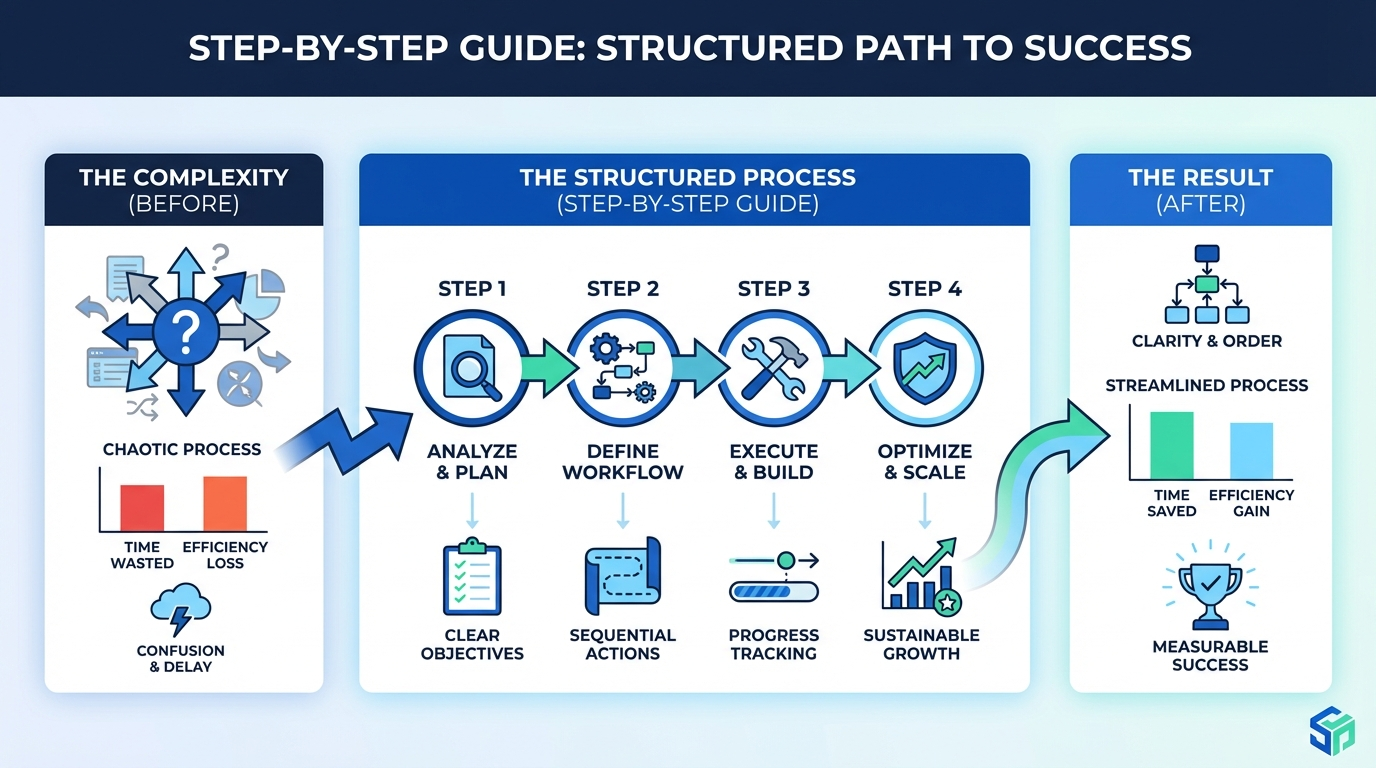
Step 1: Set profitability guardrails by SKU
First, define max ACoS, target TACoS, and minimum contribution margin for each major SKU. Without this, amazon ppc 2026 becomes guesswork.
Step 2: Restructure campaigns by intent buckets
Next, split campaigns into branded, generic high-intent, competitor, and research. Keep budget ownership clear. This improves reporting and faster optimization.
Step 3: Launch discovery campaigns with strict budgets
Additionally, run broad and phrase campaigns with capped budgets and clear search term review windows. Treat them as data acquisition, not scale channels.
Step 4: Harvest winners into exact-match scale campaigns
Then, move converting search terms into exact campaigns with dedicated budgets. Raise bids only after stable CVR and acceptable ACoS are confirmed over meaningful click volume.
Step 5: Add negatives weekly
Furthermore, apply negatives at ad group and campaign levels every week. This is one of the highest-ROI amazon ppc 2026 habits.
Step 6: Tune placement modifiers by query class
After that, increase top-of-search multipliers for proven, profitable terms. Reduce or remove for weak terms. Placement control prevents overpaying for low-value traffic.
Step 7: Optimize listings and creatives in parallel
However, ads alone cannot fix weak conversion pages. Improve titles, bullets, images, and A+ content continuously. Amazon content creation and optimization
Step 8: Run weekly and monthly review cadences
Finally, run weekly tactical reviews and monthly strategic resets. Weekly: bids, negatives, budgets. Monthly: campaign architecture, ASIN mix, and category shifts.
Cut Amazon Ad Waste This Quarter
Get a SKU-level PPC audit and a clear action plan to improve ACoS, TACoS, and contribution margin.
Best Tools & Resources
Amazon Ads Console
First, the Amazon Ads Console is still your source of truth for campaign delivery, placements, and search term performance in amazon ppc 2026.
Amazon Ads Learning Console & Guides
Additionally, Amazon’s official Sponsored Ads guides provide up-to-date format and policy details. Use it to validate strategy updates.
Helium 10
Moreover, Helium 10 helps with keyword research, listing insights, and competitor monitoring. It is useful for prioritizing expansion terms.
Jungle Scout
Furthermore, Jungle Scout supports demand estimation and niche validation. This helps set realistic traffic and budget assumptions.
SellerPlex PPC + Ops Team
Finally, your fastest path is expert execution tied to operations. SellerPlex Amazon PPC services
Common Mistakes to Avoid
Mistake 1: Scaling spend before conversion proof
Many brands increase budgets after seeing early clicks. However, clicks without conversion proof in amazon ppc 2026 can drain margin quickly. Wait for statistically meaningful conversion signals.
Mistake 2: Mixing discovery and scale in one campaign
When exploration and scaling are blended, reporting gets noisy and optimization slows. Instead, keep these functions separate so decisions stay clear.
Mistake 3: Ignoring organic + paid interaction
Some teams treat ads and SEO as separate systems. In reality, paid velocity can support rank, and rank can improve paid efficiency. Track both together.
Mistake 4: Overreliance on ACoS alone
ACoS is useful, but it is incomplete. Therefore, evaluate TACoS and contribution margin, especially when coupons, storage, and return rates are rising.
Mistake 5: Weak negative keyword discipline
If you skip negatives, your CPC creeps up and traffic quality falls. The real-world effect is slower growth with higher spend.
Advanced Tips & Strategies
1) Query-level bid ladders by lifecycle stage
First, apply different bid rules for launch, growth, and maturity phases. In amazon ppc 2026, lifecycle-aware bidding prevents overbidding mature terms and underfunding launch terms.
2) Incrementality testing with budget holdouts
Next, run controlled tests by reducing spend on select terms or ASINs and measuring organic response. This reveals whether ads are truly incremental.
3) Dayparting by conversion window
Additionally, if your data supports it, shift budget to high-conversion time blocks. Even small daypart gains can improve blended efficiency.
4) ASIN-level isolation for hero SKUs
Furthermore, split hero SKUs into dedicated campaigns with custom placement rules. This protects top performers from blended account noise.
5) Creative and listing sprint alignment
Finally, pair PPC optimization with two-week creative sprints. Better creatives lift CVR, which lowers effective CPC pressure in amazon ppc 2026.
Frequently Asked Questions
What budget should you start with for amazon ppc 2026?
A practical starting point is to set budgets by SKU margin and demand potential instead of using one flat account number. Most brands do better when they protect profitable SKUs first, then allocate exploration spend in controlled buckets.
How long does it take to see results from amazon ppc 2026 changes?
You can usually detect directional signals in 7 to 14 days, but stable optimization decisions often require 2 to 6 weeks depending on traffic volume. Faster decisions are possible on high-volume terms, while lower-volume terms need more time.
Which metric matters most in amazon ppc 2026?
No single metric should run your strategy alone. ACoS helps with campaign efficiency, TACoS shows total dependence on ads, and contribution margin tells you whether growth is truly profitable.
Should you use broad match in amazon ppc 2026?
Yes, but only in tightly controlled discovery campaigns with strict budgets and frequent search-term pruning. Broad match can uncover profitable intent clusters if you harvest winners fast and add negatives weekly.
How often should you optimize amazon ppc 2026 campaigns?
Weekly optimization is the minimum for bids, negatives, and budget shifts. In fast-moving categories, two shorter reviews per week often outperform one large monthly review.
Can amazon ppc 2026 improve organic ranking?
Paid ads can contribute to stronger sales velocity on relevant terms, which may support ranking momentum when listings convert well. However, ads cannot compensate for weak offer quality, poor creative, or pricing misalignment.
Conclusion
Amazon advertising in 2026 rewards operators who move fast, measure correctly, and protect margin with discipline. If you treat amazon ppc 2026 as a structured operating system, you can reduce wasted spend, improve TACoS, and scale profitably across your catalog.
If you want a practical roadmap tailored to your SKUs, book a free audit with SellerPlex. You will get a clear action plan for bids, campaign structure, listing gaps, and operational dependencies that impact ad performance.
Book your free supply chain audit: https://sellerplex.com/amazon-ppc/
Ready to Grow Your Amazon Business?
Book a free strategy session with our Amazon and e-commerce specialists. No obligations, just actionable insights.

SellerPlex Editorial Team
Amazon & E-commerce Experts
The SellerPlex Editorial Team brings together Amazon operators, PPC strategists, and supply chain specialists with hands-on experience scaling 100+ FBA brands. Every article is grounded in real campaign data, operational experience, and a commitment to practical, ROI-driven advice.