


Your Amazon account generated $3M last year, but your Account Health Rating dropped twice, you missed four policy notifications, and three listings got suppressed while your team was handling returns. Sound familiar?
Table of Contents
- What Is an Amazon Account Management Service?
- How It Works: The Operational Engine Behind Your Account
- Key Benefits of Professional Account Management
- Step-by-Step Guide to Choosing the Right Service
- Best Tools for Amazon Account Management
- Common Mistakes to Avoid
- Advanced Tips for Getting More from Your Account Manager
- Frequently Asked Questions
- Next Steps
This is the operational bottleneck that an amazon account management service solves. It handles the daily operational complexity of running a seller account — the compliance monitoring, buyer communications, case management, and performance tracking — so you can focus on growth.
However, most sellers confuse account management with advertising management. They hire for PPC help when what they actually need is operational infrastructure. In this guide, you’ll learn exactly what an amazon account management service covers, what separates it from other Amazon services, and how to choose the right partner.
What Is an Amazon Account Management Service?
An amazon account management service is a dedicated operations partner that handles the day-to-day health, compliance, and performance of your Amazon seller account. Think of it as your account’s operating system — it keeps everything running while you focus on product development and strategic growth.
What Account Management Actually Covers
This is where most sellers get confused. Account management is NOT advertising or PPC. Those are separate disciplines. A true account management service focuses on:
- Seller performance monitoring — Tracking your Account Health Rating, Order Defect Rate, Late Shipment Rate, and Pre-fulfillment Cancel Rate against Amazon’s thresholds
- Notification monitoring and response — Catching and responding to Amazon’s policy warnings, listing suppressions, and performance alerts before they escalate
- Customer service management — Handling buyer messages, A-to-Z claims, returns, and refund requests with response times that keep your metrics healthy
- Case management — Opening and tracking Seller Support cases for ASIN issues, catalog problems, and account-level concerns
- Compliance and policy adherence — Proactively identifying and fixing policy violations before they trigger enforcement
- Listing health management — Monitoring for suppressed, stranded, or inactive listings and resolving the root causes
- Review and feedback management — Tracking product reviews and seller feedback, flagging policy-violating reviews for removal
- Reimbursement recovery — Filing claims for lost or damaged FBA inventory, incorrect fee charges, and other recoverable costs
- Brand Registry and IP protection — Managing Brand Registry, filing IP complaints, and monitoring for unauthorized sellers
Why It Matters Now
Amazon’s enforcement has gotten significantly stricter. In 2025, Amazon issued 23% more policy warnings than the prior year, according to marketplace compliance data. A single missed notification can cascade into a listing suspension or, worse, an account-level restriction.
Furthermore, the sheer volume of operational tasks scales faster than revenue. A seller doing $5M handles roughly 3x the cases, notifications, and buyer messages of a $1M seller. Without dedicated management, operational tasks consume the founder’s strategic bandwidth.
How It Works: The Operational Engine Behind Your Account
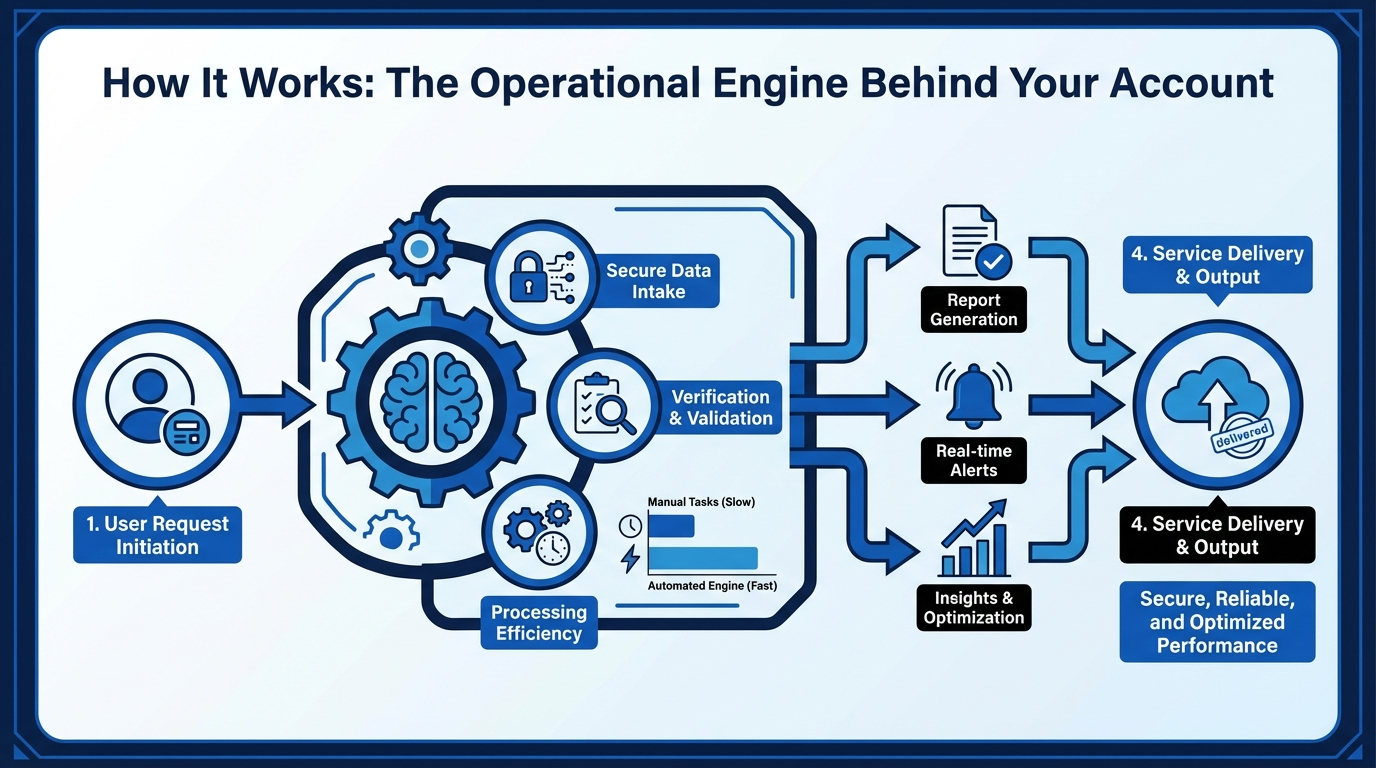
Understanding how an amazon account management service operates helps you evaluate whether a provider is genuinely comprehensive or just renaming customer service as “management.”
The Onboarding Process
A professional service follows a structured setup:
- Account audit — Deep review of Account Health, performance metrics, open cases, listing status, and historical violations
- Risk assessment — Identifying immediate threats: expiring certifications, unresolved policy warnings, suppressed ASINs
- System setup — Configuring monitoring dashboards, alert thresholds, and escalation workflows
- SOP creation — Documenting response templates, case management procedures, and decision trees for your specific account
Daily Operations Rhythm
Once onboarded, your account management team runs a disciplined daily cycle:
- Every morning: Check Account Health dashboard, review overnight notifications, respond to urgent buyer messages
- Throughout the day: Process returns and refund requests, update case logs, monitor listing health
- Weekly: Generate performance trend reports, review reimbursement opportunities, conduct compliance checks
- Monthly: Strategic account review, policy update briefings, and forecasted risk assessments
Communication Structure
Professional services typically provide:
- A dedicated account manager as your single point of contact
- Access to specialists for escalations (compliance, IP, reinstatement)
- Weekly performance dashboards delivered proactively
- Real-time Slack or messaging access for urgent issues
Pro Tip: The best account management services track leading indicators, not just lagging ones. If they’re only reporting on what happened last week, they’re behind. Look for partners who alert you to policy changes and marketplace shifts before they hit your account.
Key Benefits of Professional Account Management
Partnering with an amazon account management service protects your revenue and reclaims your time. Here are the six most measurable benefits:
1. Account Health Protection
Dedicated monitoring catches 95% of policy violations before they escalate to enforcement actions. This means fewer listing suspensions and zero account-level restrictions.
2. Faster Response Times
Amazon measures how quickly you respond to buyer messages and claims. Professional management keeps your response metrics consistently under the 24-hour threshold, protecting your seller rating.
3. Revenue Recovery Through Reimbursements
Most sellers leave money on the table. FBA inventory discrepancies, incorrect weight/dimension charges, and customer return issues create reimbursement opportunities. A dedicated team typically recovers 1-3% of annual FBA revenue through systematic claims.
4. Time Reclamation
Founders typically spend 10-15 hours per week on operational account tasks. An account management service returns that time for product sourcing, brand building, and strategic planning.
5. Risk Mitigation
Amazon’s policies change constantly. In 2025 alone, there were over 40 significant policy updates affecting sellers. Professional managers stay ahead of these changes, adjusting your account practices proactively rather than reactively.
6. Scalable Operations
As you expand to new marketplaces, add ASINs, or enter new categories, operational complexity multiplies. A management service has the systems and team depth to absorb this growth without the hiring and training overhead.
Step-by-Step Guide to Choosing the Right Service
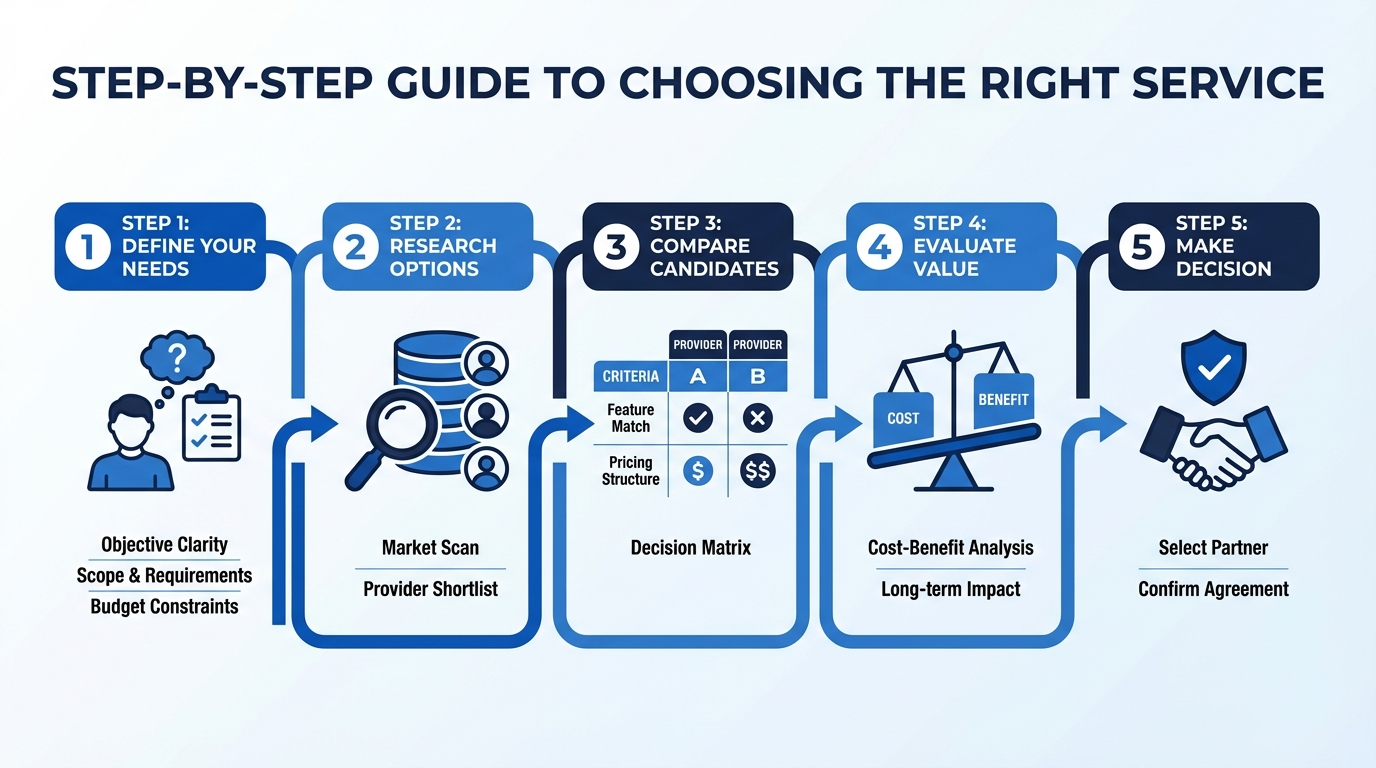
Selecting an amazon account management service is a high-stakes decision. Follow these steps to find the right partner:
Step 1: Separate Account Management from Advertising
First, clarify what you need. If your primary pain is PPC performance, you need an advertising manager, not an account manager. If your pain is operational — missed notifications, growing case backlogs, buyer message response times — you need account management.
Step 2: Define Your Operational Pain Points
Before speaking with any provider, document your specific challenges:
- How many seller performance notifications did you receive last quarter?
- What’s your average buyer message response time?
- How many open Seller Support cases do you have?
- When did you last audit your FBA reimbursements?
Step 3: Evaluate Their Monitoring Systems
Ask prospective partners what tools and dashboards they use. A provider managing your account health manually (checking Seller Central once a day) is fundamentally different from one using automated monitoring with real-time alerts.
Step 4: Check Their Compliance Track Record
Request specific examples of how they’ve handled policy violations, listing suppressions, and account health drops. The best providers have documented reinstatement processes and established relationships with Amazon’s seller performance teams.
Step 5: Assess Their Escalation Process
Ask what happens when something goes wrong at 11pm on a Friday. Do they have 24/7 monitoring? What’s the escalation path for critical issues like account suspensions?
Step 6: Understand Their Reporting Cadence
You should receive weekly performance dashboards covering Account Health Rating trends, case resolution rates, buyer satisfaction metrics, and reimbursement recovery. If they can’t describe their reporting in detail, they likely don’t have mature systems.
Step 7: Verify They Understand Your Category
Amazon’s rules vary significantly by category. A provider experienced in supplements faces different compliance requirements than one in electronics. Ensure they have relevant category expertise.
Step 8: Start with a Trial Period
Reputable services offer 30-60 day trial periods. During the trial, evaluate their responsiveness, reporting quality, and whether your Account Health metrics improve.
Stop Firefighting Amazon Account Issues
Get a dedicated operations team monitoring your account health, handling buyer communications, and protecting your seller standing.
Best Tools for Amazon Account Management
Even with an amazon account management service handling daily operations, understanding the tool landscape helps you evaluate provider sophistication:
1. Amazon Seller Central
The foundation. Account Health Dashboard, Voice of Customer reports, and Performance Notifications are the primary data sources for account management. Your provider should live in these dashboards.
2. Helium 10
Beyond keyword research, Helium 10’s Alerts tool monitors listing changes, hijackers, and Buy Box losses — critical for account health management.
3. SellerBoard
Profit analytics with FBA reimbursement detection. Automatically identifies lost/damaged inventory and fee discrepancies that your account manager should be filing claims for.
4. FeedbackWhiz
Automated review and feedback monitoring with instant alerts. Helps your account team track review trends and flag policy-violating reviews for removal.
5. Keepa
Price and Buy Box tracking. Essential for detecting unauthorized sellers and pricing anomalies that affect your account performance.
Common Mistakes to Avoid
When hiring an amazon account management service, watch out for these five pitfalls:
Mistake 1: Confusing PPC Management with Account Management
This is the most common mistake. Many agencies sell “account management” packages that are primarily PPC optimization with some basic reporting on the side. True account management focuses on operational health, compliance, and buyer satisfaction — not advertising metrics.
Mistake 2: Choosing Based on Price Alone
A $1,000/month service that misses a critical policy notification can cost you $50,000 in lost revenue from a suspension. Evaluate providers on their monitoring capabilities and track record, not just their monthly fee.
Mistake 3: Not Auditing Their Response Times
Ask for SLA documentation. If a provider can’t commit to specific response times for buyer messages, cases, and policy notifications, they likely don’t have the operational discipline to manage your account effectively.
Mistake 4: Ignoring Reimbursement Recovery
Some providers don’t include reimbursement recovery in their scope. Given that systematic recovery typically returns 1-3% of FBA revenue, this should be a standard inclusion.
Mistake 5: No Exit Documentation
If the partnership ends, you need complete documentation of all active cases, ongoing issues, and operational SOPs. Ensure your contract includes knowledge transfer provisions.
Advanced Tips for Getting More from Your Account Manager
Once you’ve engaged an amazon account management service, these strategies maximize the partnership:
Tip 1: Share Product Launch Calendars in Advance
Give your account manager 30 days notice on new product launches. They can pre-configure monitoring, prepare compliance documentation, and set up listing health checks before launch day.
Tip 2: Connect Them to Your Supply Chain Team
Account health issues often originate in the supply chain — late shipments, inventory discrepancies, and quality complaints. Connecting your account manager with your supply chain operations creates a feedback loop that catches issues at the source.
Tip 3: Invest in Brand Registry Early
If you haven’t enrolled in Amazon Brand Registry, make it a first-month priority with your account manager. Brand Registry unlocks tools for IP protection, A+ Content, and Amazon Vine — all of which strengthen your account health profile.
Tip 4: Request Quarterly Risk Reviews
Beyond weekly operations, schedule quarterly deep-dives where your account manager identifies emerging risks: upcoming policy changes, category-specific enforcement trends, and marketplace expansion considerations.
Tip 5: Document Everything
Create a shared knowledge base with your account manager covering case precedents, policy interpretations, and reinstatement strategies specific to your account. This institutional knowledge compounds over time and protects you if team members change.
Frequently Asked Questions
What does an amazon account management service cost?
Pricing typically ranges from $1,500-$8,000 per month depending on account complexity, ASIN count, and marketplace coverage. Some providers charge per marketplace or per ASIN tier. The key cost driver is how many buyer messages, cases, and compliance events your account generates monthly.
What’s the difference between account management and a virtual assistant?
A virtual assistant handles individual tasks you assign. An account management service proactively monitors, manages, and optimizes your account operations based on established SOPs and strategic goals. The difference is reactive task execution versus proactive operational management.
How is account management different from PPC management?
Account management focuses on operational health: seller performance metrics, compliance, buyer communications, case management, and reimbursements. PPC management focuses on advertising: campaign structure, keyword bidding, ad spend optimization, and ACoS targets. Many sellers need both, but they are distinct disciplines requiring different expertise.
When should I hire an account management service?
Consider hiring when you’re above $500K in annual revenue and experiencing any of these: growing case backlogs, missed policy notifications, buyer message response times exceeding 12 hours, or you’re spending more than 10 hours per week on operational tasks instead of growth activities.
Can an account management service prevent suspensions?
No service can guarantee suspension prevention — Amazon’s enforcement is ultimately their decision. However, professional monitoring catches the warning signs early. Most account suspensions follow a pattern of escalating warnings. Catching and addressing these warnings at the first stage prevents the vast majority of enforcement actions.
What metrics should I track with my account manager?
Focus on Account Health Rating, Order Defect Rate, buyer message response time, case resolution rate, reimbursement recovery amount, and listing health (percentage of active vs. suppressed ASINs). These six metrics capture the full operational picture.
Do account management services handle international marketplaces?
Most professional services support multiple Amazon marketplaces (US, UK, EU, Japan, etc.), but each marketplace has different compliance requirements and buyer communication norms. Verify that your provider has specific experience with each marketplace you operate in, not just US expertise applied to international accounts.
Next Steps
An amazon account management service is your operational backbone — it protects account health, handles buyer communications, manages compliance, and recovers lost revenue through systematic reimbursement claims. The right partner transforms your Amazon operations from a constant source of firefighting into a managed, monitored system.
If you’re spending more than 10 hours per week on operational Amazon tasks, or if you’ve received policy notifications that caught you off guard, it’s time for professional support. Start by auditing your current Account Health metrics and documenting your operational pain points.
Explore SellerPlex’s Amazon Account Management Services and see how a dedicated operations partner can protect your account while you focus on scaling your brand.
Ready to Grow Your Amazon Business?
Book a free strategy session with our Amazon and e-commerce specialists. No obligations, just actionable insights.

SellerPlex Editorial Team
Amazon & E-commerce Experts
The SellerPlex Editorial Team brings together Amazon operators, PPC strategists, and supply chain specialists with hands-on experience scaling 100+ FBA brands. Every article is grounded in real campaign data, operational experience, and a commitment to practical, ROI-driven advice.