


Amazon ad costs are still rising, and many sellers feel it in margin first. In fact, average cost-per-click in competitive categories can move fast during peak windows, which makes amazon ppc pricing a board-level issue, not just a campaign setting. If your CPC climbs while conversion rate stays flat, profit can disappear even when sales look healthy.
Table of Contents
In this guide, you’ll learn what drives pricing, what a realistic budget looks like in 2026, and how to cut waste without throttling growth. You’ll also get a practical framework you can run this week, including tools, mistakes to avoid, and advanced tactics for better ROAS.
What Is Amazon PPC Pricing?
Amazon PPC pricing is the effective amount you pay to generate ad clicks and attributed sales on Amazon. At the auction level, you pay per click. However, your real pricing model should include CPC, conversion rate, ACOS, TACOS, and contribution margin per order.
First, Amazon uses a second-price style auction logic with quality and relevance signals layered in. That means your max bid matters, but listing quality, click-through rate, and conversion history also influence delivery. As a result, two sellers can bid the same amount and still pay different effective CPC.
Additionally, pricing matters because it sets the ceiling for scale. If your break-even ACOS is 28% and your campaigns run at 40%, growth can become expensive fast. According to Amazon Ads guidance on CPC fundamentals, click cost alone is never enough to judge performance; profitability depends on downstream conversion and basket economics (source: Amazon Ads CPC guide).
How It Works
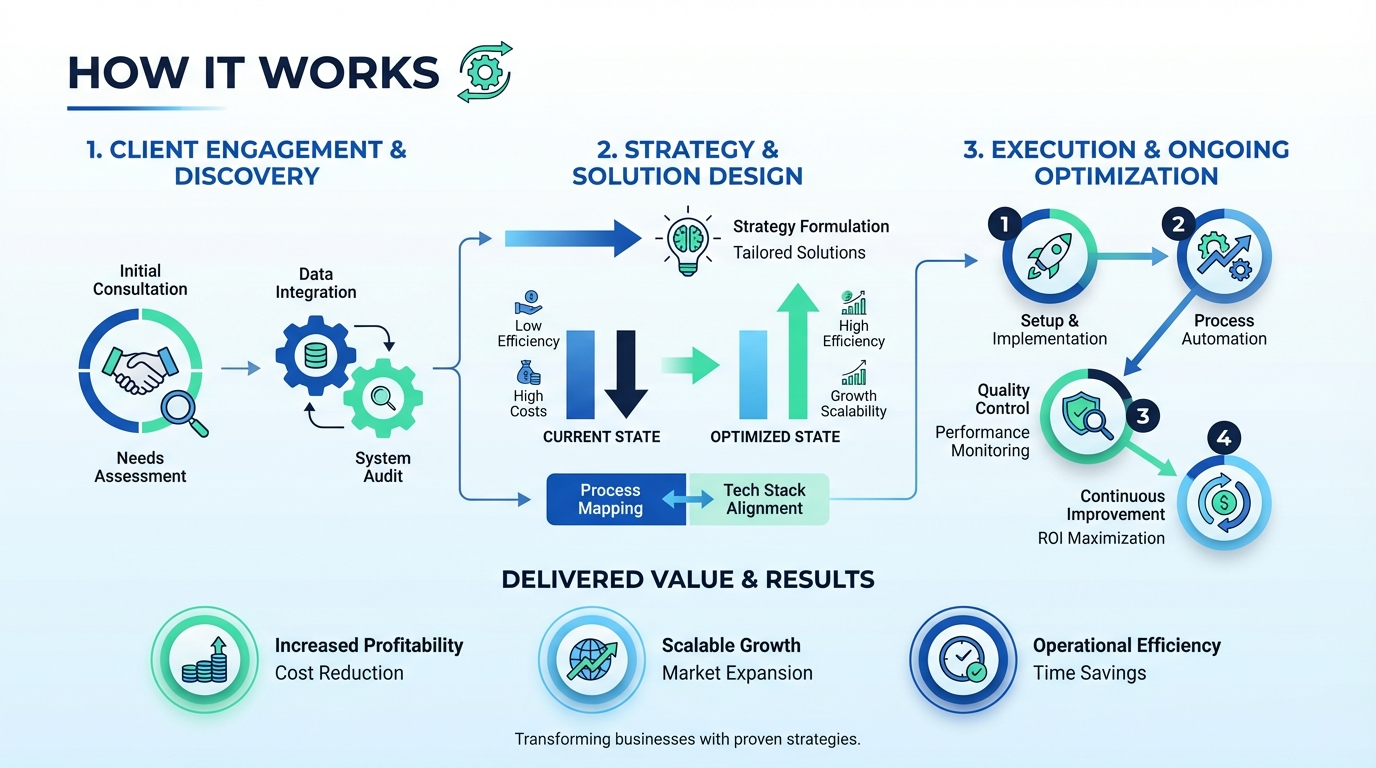
1) You enter an auction every eligible impression
When a shopper searches or browses, Amazon evaluates ad eligibility. Your targeting, bid, placement multipliers, and campaign budget determine whether you compete.
2) Your bid sets the upper boundary
Your bid is the most you are willing to pay. However, you usually pay less than your max bid when competition is lower.
3) Relevance influences delivery quality
Amazon rewards relevance. Therefore, keyword-to-listing match, retail readiness, review quality, and historical CTR all influence impressions and CPC efficiency.
4) Placement and format change effective pricing
Top-of-search often converts better but costs more. Sponsored Brands and Sponsored Display can widen reach, yet each format has different pricing behavior.
5) Conversion rate determines real cost of sale
A $1.80 click is not expensive if conversion rate is 18% and margins hold. In contrast, a $0.90 click can be unprofitable if conversion rate is 5%.
6) Seasonality and category pressure move prices weekly
During Prime events and Q4, competition increases in most categories. Consequently, amazon ppc pricing is dynamic and must be managed with tighter controls.
For practical benchmarking, compare your current metrics against category estimates from platforms like Jungle Scout and your own historical account data, not generic averages.
Key Benefits
When you manage amazon ppc pricing with a margin-first system, you gain more than lower ad spend.
- Stronger contribution margin per order
First, tighter bid controls reduce overpayment on low-intent traffic.
- More stable CAC by campaign type
Additionally, separating discovery and harvest campaigns prevents blended CAC drift.
- Better inventory planning
Because ad velocity becomes more predictable, your Amazon supply chain management decisions improve.
- Higher budget efficiency
Specifically, reallocating budget to proven search terms raises sales per ad dollar.
- Improved listing feedback loop
PPC data reveals conversion blockers. You can then improve creative with Amazon listing and content optimization.
- Clearer growth forecasting
As a result, leadership can model spend-to-revenue scenarios with fewer surprises.
- Faster scale once unit economics are validated
Ultimately, once your targets are stable, you can scale with confidence through structured Amazon PPC management.
If you want a baseline before optimization, review this related benchmark article: Amazon PPC Cost in 2026: What You’ll Actually Pay.
Step-by-Step Guide
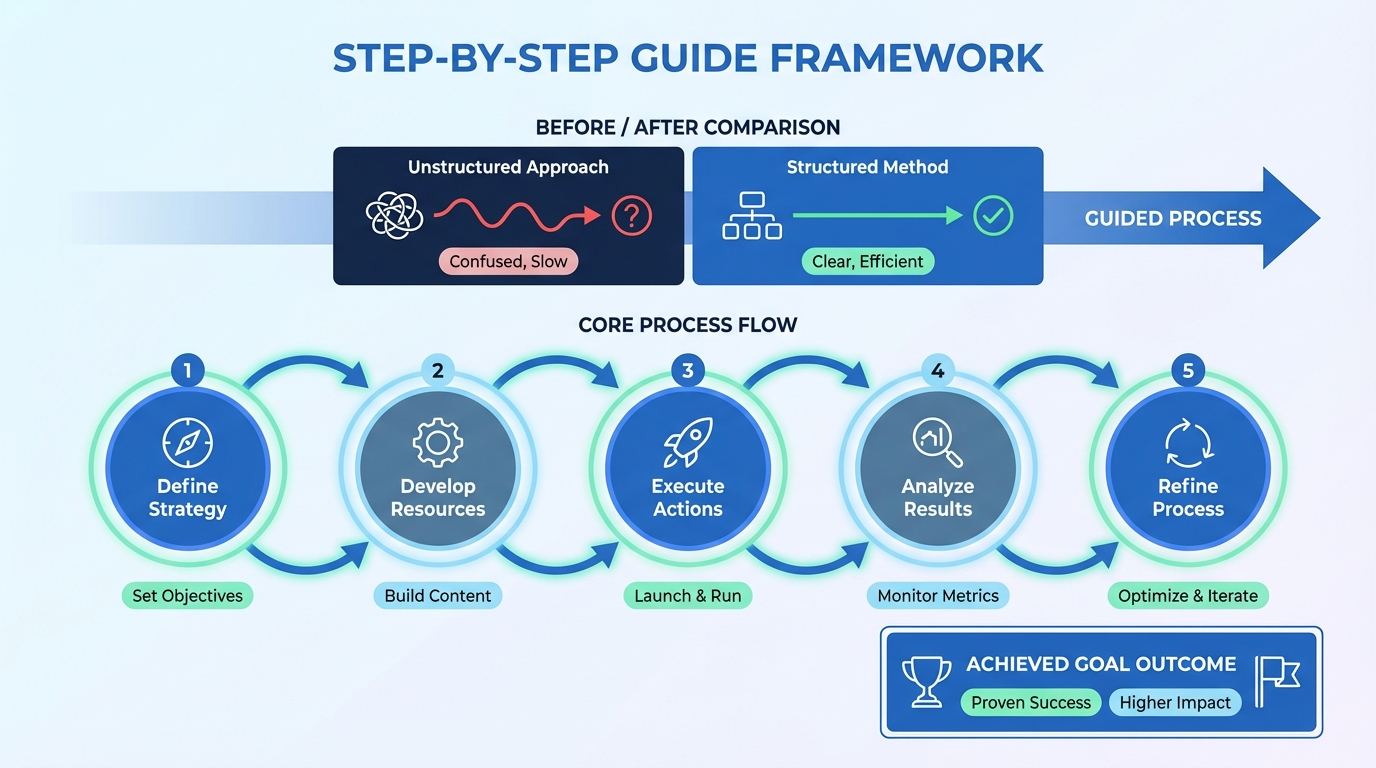
Step 1: Set your true break-even ACOS first
Start with contribution margin, not revenue. Include COGS, Amazon fees, and variable fulfillment costs. Then calculate break-even ACOS per ASIN.
Step 2: Split campaign intent by funnel stage
Next, separate campaigns into discovery (broad/auto), validation (phrase), and harvest (exact/ASIN). This avoids mixing expensive exploration with profit-driving keywords.
Step 3: Rebuild targeting hygiene weekly
Use search term reports to promote winners and negate waste. For example, move converting terms from discovery into exact match campaigns with dedicated budgets.
Step 4: Align bids to conversion tiers
Create bid bands based on conversion rate and margin:
- Tier A: High CVR + strong margin → scale bids
- Tier B: Medium CVR → maintain
- Tier C: Low CVR or weak margin → reduce or pause
Step 5: Use placement multipliers surgically
Then apply Top of Search multipliers only where rank gain clearly improves profitability. Avoid account-wide multipliers.
Step 6: Optimize retail readiness before aggressive scaling
If sessions rise but conversion lags, fix listing issues first. Improve title clarity, image stack, and A+ content with SellerPlex account management support.
Step 7: Budget by profit potential, not campaign age
Older campaigns often keep budget by default. Instead, reassign spend weekly to campaigns beating target ACOS and TACOS guardrails.
Step 8: Track leading and lagging metrics together
Finally, monitor CPC, CTR, CVR, ACOS, TACOS, and contribution margin side by side. If CPC rises 15% but CVR rises 20%, pricing pressure may still be acceptable.
Lower PPC Spend Without Losing Rank
See where your ad dollars leak and get a margin-first action plan for your catalog.
Best Tools & Resources
Amazon Advertising Console
First, use native reporting for search terms, placement, and campaign diagnostics. This is your source of truth for attributed performance.
Amazon Ads Learning Resources
Additionally, Amazon’s docs explain bidding logic, attribution windows, and measurement basics. Start here for policy-safe execution: Amazon Ads CPC guide.
Jungle Scout
Jungle Scout helps estimate category competitiveness and keyword opportunities. It is useful for triangulating amazon ppc pricing expectations: Jungle Scout PPC cost guide.
Helium 10
Helium 10 supports keyword intelligence and listing optimization workflows that improve conversion, which lowers effective cost per sale over time: Helium 10.
SellerPlex PPC Playbooks
For execution depth, use internal playbooks like Amazon PPC 2026: Complete Playbook to Scale Profitably.
Common Mistakes to Avoid
Mistake 1: Managing to ACOS alone
ACOS can look healthy while total margin declines due to discounts, returns, or fee shifts. Therefore, include TACOS and contribution margin in every weekly review.
Mistake 2: Letting auto campaigns run unmanaged
Auto campaigns are useful for discovery. However, without negation and term harvesting, they absorb budget with low-intent clicks.
Mistake 3: Raising bids before fixing conversion
If your listing underperforms, higher bids only buy more expensive traffic. In other words, you scale inefficiency.
Mistake 4: Ignoring budget caps during peak days
Running out of budget by noon skews data and suppresses rank recovery. As a result, you can misread true demand.
Mistake 5: Treating all ASINs equally
Catalogs are uneven by margin and lifecycle stage. Consequently, flat rules across all SKUs usually reduce profitability.
Advanced Tips & Strategies
1) Build dayparting rules from intraday conversion patterns
If your category converts better during evening hours, shift budget and bid pressure to those windows. This improves effective CPC efficiency.
2) Use portfolio-level guardrails
Set portfolio targets for blended TACOS and margin. Then let campaign-level decisions ladder up to portfolio outcomes. This keeps operators from optimizing in silos.
3) Deploy rank-defense exact campaigns
Protect your highest-value terms with exact-match campaigns and stricter negatives. In competitive niches, this defends revenue while limiting auction waste.
4) Pair PPC with listing CRO sprints
Every 2-4 weeks, run a conversion sprint on top ASINs. Test hero image order, value proposition clarity, and A+ modules. Even small CVR gains can offset rising amazon ppc pricing.
5) Use scenario planning before events
Before Prime Day or Q4, model three plans: conservative, base, and aggressive. Include expected CPC inflation, inventory risk, and break-even thresholds. This prevents reactive decisions.
Frequently Asked Questions
What is a typical amazon ppc pricing range in 2026?
Typical ranges vary by category, intent, and season. Many sellers see CPC from under $0.50 in less competitive niches to over $2.00 in crowded categories, but your true cost depends on conversion rate and contribution margin, not click price alone.
How much should you budget monthly for amazon ppc pricing?
A practical starting point is to tie budget to revenue goals and break-even ACOS by ASIN. If you can profitably scale, you increase spend where campaigns exceed margin targets; if not, you reallocate before increasing total budget.
Why does amazon ppc pricing increase even when your bids stay flat?
Pricing can rise because competitor pressure, seasonal demand, and placement competition change auction dynamics. In addition, weak CTR or CVR can reduce relevance quality, which increases the effective cost required to stay visible.
Is lower CPC always better for amazon ppc pricing performance?
Lower CPC helps only when conversion quality remains strong. A higher CPC can still be profitable if shoppers convert at better rates and average order economics support your target ACOS and margin goals.
How often should you optimize amazon ppc pricing settings?
Most accounts benefit from weekly optimization cycles with deeper monthly reviews. During peak events or rapid catalog changes, tighter checks are useful because auction conditions and conversion behavior can shift quickly.
Can better listing content reduce amazon ppc pricing pressure?
Yes, better listing content can improve CTR and conversion rate, which lowers effective cost per order. Improved relevance signals may also support better ad efficiency over time, especially on your core keywords.
Next Steps
Amazon PPC costs are not fixed, and that is the opportunity. If you manage amazon ppc pricing through break-even math, conversion quality, and campaign intent, you can protect margin while scaling revenue. First, audit your top 20 spend terms by profitability. Next, rebalance budget toward proven winners. Then fix listing bottlenecks that hold CVR back.
If you want a faster path, get a focused audit from the SellerPlex team. You’ll get clear priorities for bids, structure, and conversion improvements tied to business outcomes. Start here: Amazon PPC management.
Ready to Grow Your Amazon Business?
Book a free strategy session with our Amazon and e-commerce specialists. No obligations, just actionable insights.

SellerPlex Editorial Team
Amazon & E-commerce Experts
The SellerPlex Editorial Team brings together Amazon operators, PPC strategists, and supply chain specialists with hands-on experience scaling 100+ FBA brands. Every article is grounded in real campaign data, operational experience, and a commitment to practical, ROI-driven advice.